
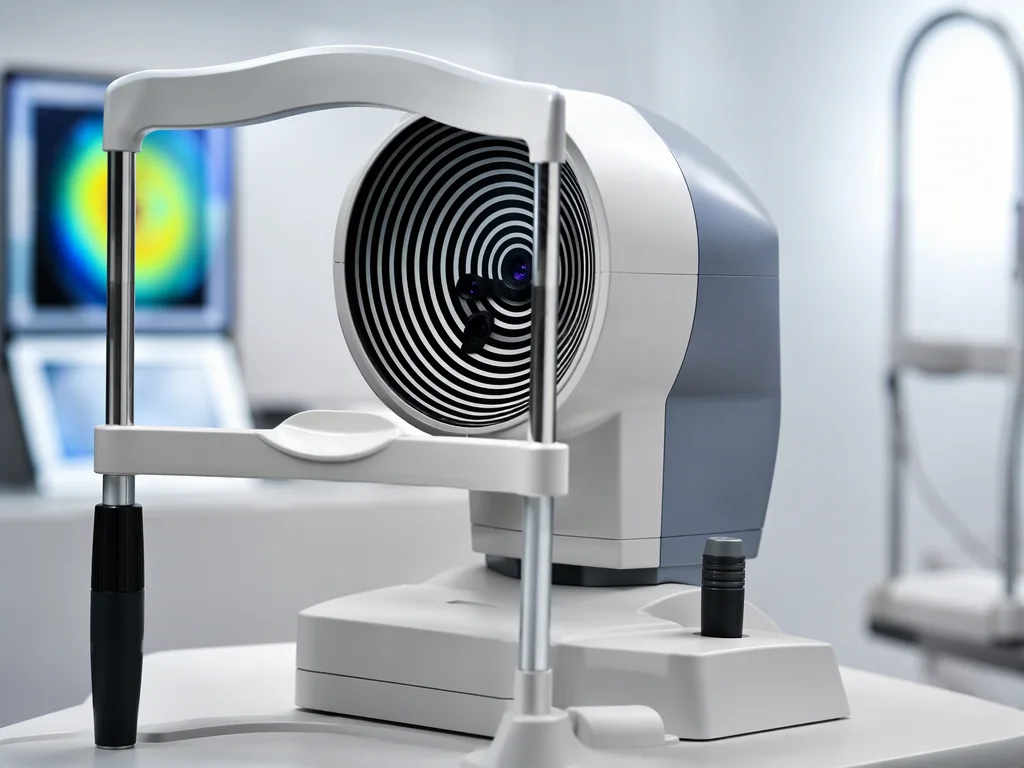
Why corneal shape matters
Keratoconus involves progressive thinning and shape change in the cornea in some people. It can cause irregular astigmatism and changing or distorted vision. Corneal topography or tomography helps assess the shape, but scans must be interpreted alongside an examination and previous measurements.
Not every irregular scan means the same condition, and not every person needs the same treatment.
Cross-linking is not specs-removal surgery
Corneal collagen cross-linking, sometimes called C3R or CXL, may be considered by a specialist when appropriate, with the aim of stabilising progression. It does not directly remove a spectacle prescription or guarantee improved vision. Follow-up scans may be important to monitor change.
The exact protocol, risks and candidacy require a treating ophthalmologist’s advice.
Ask how the diagnosis and plan were made
Ask what the corneal maps show, whether measurements should be repeated, how progression is assessed, what treatment is intended to achieve and what alternatives or monitoring are appropriate. Share previous scans and prescriptions if available.
Laser refractive surgery may be unsuitable for some corneal patterns. A “thin cornea” should not lead to an automatic recommendation for another procedure.
Confirm services before travelling
This website does not claim that a particular cross-linking platform or procedure is currently available at Sentra. Contact the Malad East clinic to confirm services, appointment details and which reports to bring before travelling.
Medical information & sources
This page provides general patient education and does not diagnose candidacy or replace an ophthalmologist’s examination. Clinical content requires final treating-doctor approval before launch.