
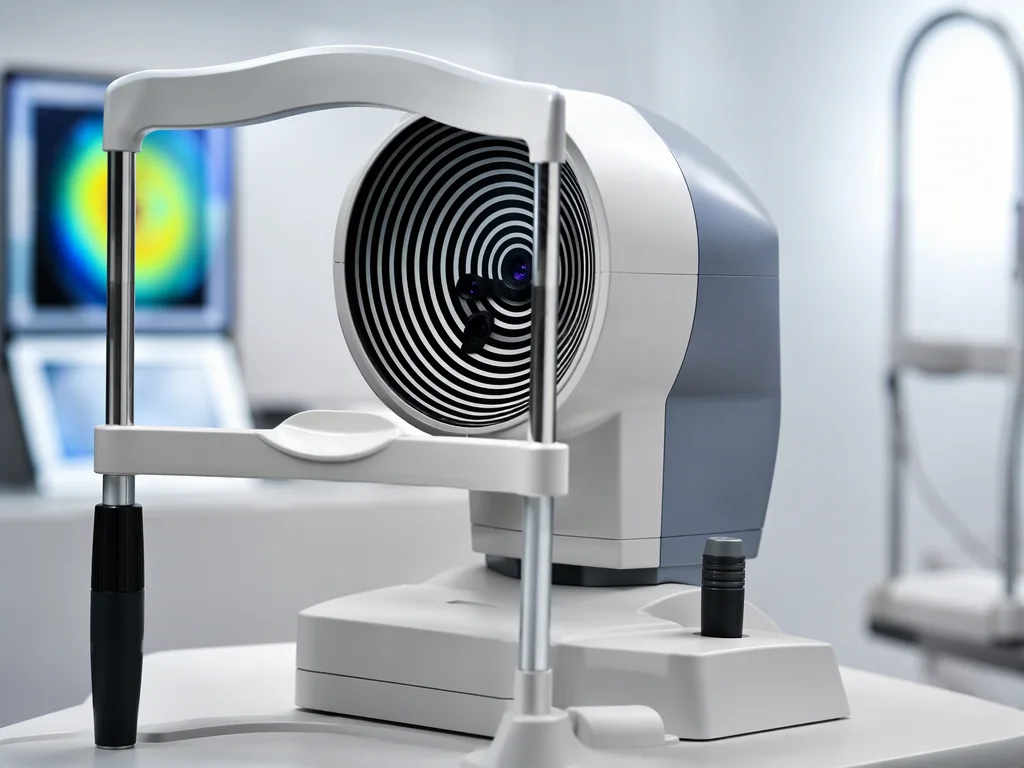
What a corneal map contributes
Corneal topography represents curvature and elevation patterns across the corneal surface. These measurements can help the surgeon plan treatment and identify irregularity or disease that may make surgery unsuitable.
In a topography-guided procedure, selected mapping data informs the laser plan. The treatment still depends on accurate scans, stable measurements, appropriate corneal tissue and clinical interpretation. More data does not replace judgement.
How it differs from a standard LASIK plan
A conventional LASIK plan is primarily based on refraction and other clinical measurements. Topography-guided treatment adds surface-mapping information with the aim of addressing selected corneal irregularities while correcting refractive error.
Not every patient needs this approach, and not every irregular cornea should receive laser treatment. Sometimes the scan reveals a reason to avoid surgery rather than a reason to customise it.
Benefits, expectations and limitations
The aim remains improved unaided vision with an acceptable risk profile. Dryness, glare, halos, residual correction and other LASIK-related risks still apply. Claims about a fixed number of mapped points or a specific visual outcome should only be considered in relation to the actual device and approved clinical information.
Ask whether your own maps are reliable and repeatable, why topography guidance is recommended and what alternatives exist.
Availability and written planning
Technology availability can change. Confirm the current platform at Sentra during your consultation and ask for a written recommendation explaining the proposed procedure, expected recovery and costs. Avoid choosing solely because a technique sounds more advanced.
Medical information & sources
This page provides general patient education and does not diagnose candidacy or replace an ophthalmologist’s examination. Clinical content requires final treating-doctor approval before launch.